
The Driving Tests A Practical Guide
Everything you need to know about preparing for your theory and practical driving tests in Essex
Part One: The Theory Test
The Theory Test has two sections—you must pass both.
If you fail one, you’ll need to retake the entire test.
Multiple-Choice Questions (50 Questions)
Most questions offer multiple answers; some require more than one.
Case study questions simulate real-life driving scenarios with five related questions.
“Flag” tricky questions and return to them later.
Pass mark: 43/50.
After this section, you’ll get a 3-minute break before Hazard Perception.
Hazard Perception (14 Video Clips)
Each clip features everyday road scenes with one developing hazard (except one clip, which has two).
A developing hazard is something that forces you to slow down, stop, or change direction.
Click as soon as you spot a hazard—the sooner you react, the higher your score (up to 5 points per hazard).
Don’t click repeatedly, or you’ll score zero for that clip.
Pass mark: 44/75.
Example:
You see a parked car—no hazard yet. Then, its indicator flashes (developing hazard—click!). Finally, it pulls out—click again for maximum points.

Part Two: The Practical Test
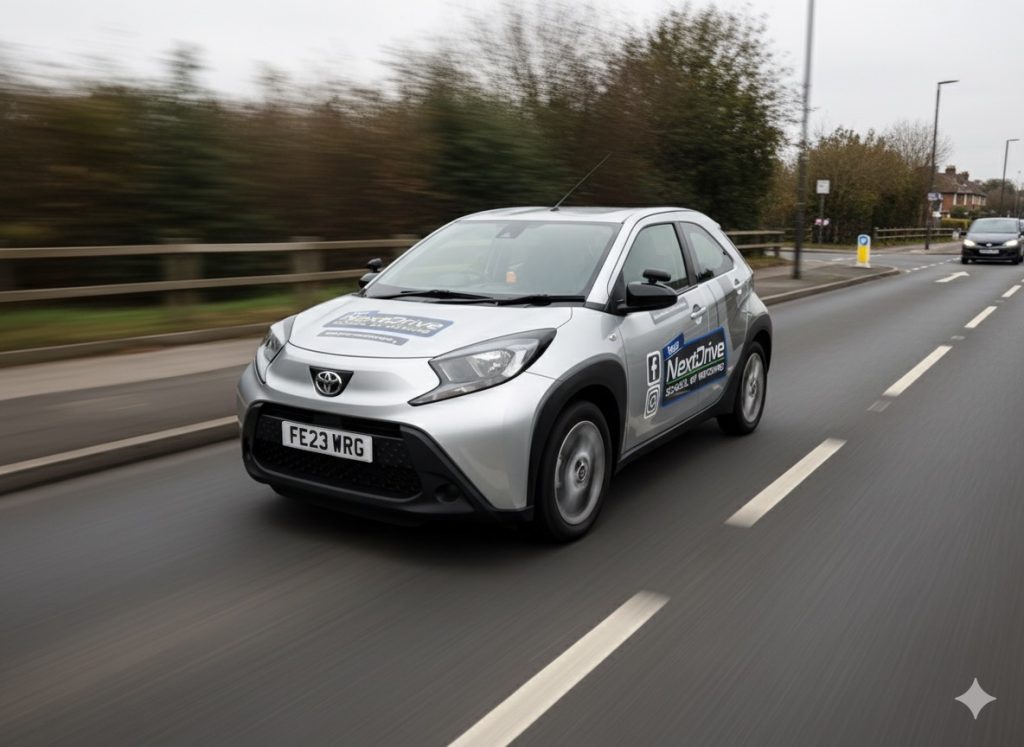
Once you pass your Theory Test, you’ll take the Practical Test with a DVSA examiner, the practical driving test will take between 38 – 40 minutes and will consist of:
Vehicle safety checks (“show me, tell me” questions).
Independent driving (following sat-nav or signs).
Manoeuvres (one reverse manoeuvre, either parallel parking, forward bay parking, reverse bay parking or pull up on the right and reverse two car lengths).
Safe driving in real traffic.
Ready To Start Your Driving Journey?
Book Driving Lessons Now
Enter first part of your postcode, choose manual or automatic and enter email to get started.
Nearest Theory Test Centre:
Third Floor, Tylers House, 5 Tylers Avenue
Southend-On-Sea
SS1 2BB
Book Your Theory Test:
Nearest Driving Test Centre:
The Tickfield Centre, Tickfield Industrial Estate, Tickfield Ave
Southend-on-Sea
SS2 6LL
Book Your Driving Test:
New to driving? Check out our Driving Lessons FAQ Guide for answers to common questions about tests and lessons."
Check Out Our Reviews!!
 Posted on Google
 Sharon Lillywhite
Trustindex verifies that the original source of the review is Google.
Stuart has been amazing with Mason and his driving. Always reliable and on time , couldn’t have wished for a better instructor. Will be recommending Stuart to all my friends teenagers looking to go with an instructor who has a calm approach in his training and makes their student feel at ease. Cant thank you enough. From Sharon and Karl Passed 05.08.2026 at SouthendPosted on Google mason lillywhiteStewart is an amazing driving instructor who taught me how to become a safe and good driver. Today I passed first time with Stewart’s help and couldn't recommend him enough.Posted on Google
 Ivy JenkinsStuart is an incredible instructor,he keeps me calm in so many situations with many laughs on the way and has taught me so much.Would highly recommend to anyone!Posted on Google
 Helen PrendergastStuart really was a calm and steady instructor throughout. Will passed first time with no minors, I feel Stuart took a methodical approach consistently matching Will's ability. Keeping him constantly updated. Thank you so much 😊Posted on Google
 WilliamStuart was a great instructor and made the journey so enjoyable. The support for the theory test was also great. 10/10Posted on Google
 jack baileyStuart was an amazing instructor he managed to fit me in too his schedule and taught me everything very well and always explained everything to the highest quality. He’s so polite, friendly and easy to talk too. He taught all the tests routes through Southend which helps a lot coming too the driving testPosted on Google
 Thomas MillerReally nice driving instructor, always calm and patient with me and teaches very well. Just what any learner would need. Thank you!Posted on Google
 Tom AshtonGreat instructor calm paitent with clear instruction, reliable and understanding got me a great pass. Would reccomend to any one learning or just looking for a refreshPosted on Google
 Violet BathoStuart is the best instructor around. He is patient and has great knowledge. He ensures you are 100% ready for your test which leaves you at ease. I will 100% recommend him to everyone. If it wasn’t for him I wouldn’t have passed. Thank you so much